Our Blog


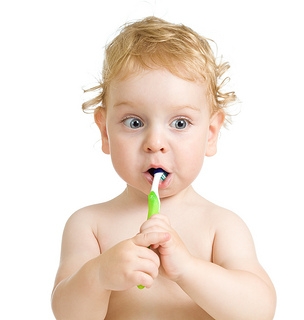
How do I clean my baby’s teeth?

July 20th, 2022

Creating good dental hygiene habits early in your child’s life is essential to the health of his or her teeth, even when your infant doesn’t have any. By starting now, you can set the foundation for your son or daughter’s oral health later on in life.

When do I start?

The best time to begin brushing your baby’s teeth is before that first tooth ever comes in. Wipe your little one’s gums gently with a soft washcloth soaked in warm water every day. Not only will this help to get rid of bacteria in the mouth, but it will also familiarize your child with a daily brushing routine.

What do I use?

When your child’s teeth begin to emerge, it’s time to switch to a baby toothbrush. Select one with a big grip for your hand and a small head that’s easy to maneuver in your baby’s mouth.

Your little one won’t need toothpaste until he or she is about a year old; and even then, only a small amount is necessary. Apply an amount the size of a grain of rice and move to a pea-sized amount when your infant is about two years old.

By around six years, your child will probably rinse and spit without your help. At this time, you may introduce a child-friendly fluoride mouthwash.

How do I do it?

Until about age five or six, it’s likely your child will still need your help with brushing teeth. Gently scrub over all the teeth and gums, even where teeth have yet to come in. It may be helpful to explain what you are doing and how you are doing it, so your toddler can learn to brush her or his teeth alone.

Paired with regular visits with Dr. Parulkar at our Lewis Center, OH office, proper hygiene habits instilled in your child early on will set up a good foundation for a healthy mouth in the future.

Finding the Right Dental Products for Your Child

July 13th, 2022

Dr. Parulkar and our team know how overwhelming it can be to pick the right dental products for your children. When you visit the dental aisle at the grocery store, you see too many options to choose from. We want to help you make an informed decision based on your son or daughter’s needs.

First, you should consider your child’s age and where he or she is in terms of development. Most kids are unable to floss properly until around 12 years of age because of the necessary dexterity. If your youngster is under 12 years old, make sure to assist with flossing every night.

Another option is to use flossers for children. This will make the exercise a bit easier for your little one, because flossers have different-sized handles to fit all ages of hands.

When you’re looking for a child’s toothbrush, the head should be a little bigger than the top portion of your son or daughter’s thumb. If a toothbrush is too big, it won’t be able to reach small areas in the mouth properly. Battery-powered toothbrushes are also recommended because they improve overall brushing quality for both adults and children.

If your child is too young to spit, he or she should use toothpaste without fluoride. Small children tend to swallow toothpaste, even when they don’t intend to. Try looking for a toothpaste that has xylitol listed as the first ingredient. This is a natural sweetener that is beneficial to teeth.

You should also try to identify a flavor that appeals to your child. Same as adults, children like to brush more if they enjoy the flavor that lingers in their mouth after brushing.

It’s smart to look at the ingredients in a toothpaste for the benefits your child needs. Some toothpastes contain sodium fluoride, which fights effectively against cavities. If your child has a sweet tooth, or has already had a cavity, we recommend buying a toothpaste with this ingredient.

Stannous fluoride is another popular ingredient that discourages cavities and includes anti-bacterial properties. You should also watch for the ingredient triclosan, which also suppresses bacteria. These ingredients are both recommend for children who have a high risk for cavities.

Anti-sensitivity toothpaste should also be easy to find in the dental aisle of the store. It contains potassium nitrate to help with sore gums and teeth.

If you’re still unsure which dental products your child should be using, contact our Lewis Center, OH office. Once we have general information about your child and his or her dental health, we can guide you in the right direction.

When it comes to picking the right toothbrush, toothpaste, floss, and mouthwash for your child, Delaware Pediatric Dentistry is always here to help.

Summer Dental Health? Get into the Swim of It!

July 6th, 2022

On a sizzling hot day, there’s not much that makes us happier than heading to the water for a quick swim, some gentle laps, or even a rousing game of water polo. And this being a sizzling hot dental blog, we are happy to offer some tips on how to make your summer swim good for your dental health as well as your mental health!

  • Mouthguards

You might use your mouthguard all the time—for biking, or basketball, or skiing. But in the pool? Absolutely! Anyone who has played water polo knows what a physical workout it is. Elbows! Hard tosses! Collisions! And it’s not just pool sports. Water-skiing on the lake, surfing in the ocean—anywhere humans and solid objects are involved, tooth and jaw injuries are possible. Don’t spend valuable summer hours tending to a cracked or broken tooth as a result of sports accidents.

And, unlikely though it seems, even hanging by the pool can be hazardous to your smile. Hard concrete edges wait to greet surfacing divers. Slippery cement and tiles surrounding the pool are the downfall of many a swimmer running to jump back into the water. Be aware of possible dental dangers, and use a mouthguard as a great proactive way to avoid them.

  • Swimming Pools & Chlorine

Ah, the smell of chlorine! We all want to know that swimming pools are as clean as they can be, and one method of keeping them that way is with the addition of antimicrobials to the water. But too much exposure to chemicals can cause enamel erosion, or even a condition called “swimmer’s calculus.” Swimmer’s calculus is recognized by a hard, brownish, tartar deposit that appears on the front teeth of swimmers who spent a lot of hours in the pool. It’s a cosmetic problem, but one that’s difficult to get rid of without a professional cleaning. If you’re a competitive swimmer, or simply someone who spends many hours a week in treated water, give us a call if you notice hard-to-remove discoloration or tooth sensitivity.

  • Retainers

Different people have different opinions on whether or not your retainer should be exposed to the chlorine in pool water. (Or the salt in saltwater or the bacteria in lake water.) Ask us for ours! But you’re best off leaving it in your bag or locker, anyway, because retainers can be easily lost in the water. They might be able to survive a swimming pool, but a lake or ocean rescue is very unlikely. Just remember to put your retainer in a case, in a safe spot, and replace it when you’re out of the water for the day.

Enjoy your time on the water, and don’t forget to schedule an exam with Dr. Parulkar and a professional cleaning if you haven’t been in the office for a while. If you do have a dental problem or an accident, give our Lewis Center, OH office a call immediately. We want to make sure you dive in to summer fun with a healthy, beautiful smile!

Summer Dental Health? Get into the Swim of It!

July 6th, 2022

On a sizzling hot day, there’s not much that makes us happier than heading to the water for a quick swim, some gentle laps, or even a rousing game of water polo. And this being a sizzling hot dental blog, we are happy to offer some tips on how to make your summer swim good for your dental health as well as your mental health!

  • Mouthguards

You might use your mouthguard all the time—for biking, or basketball, or skiing. But in the pool? Absolutely! Anyone who has played water polo knows what a physical workout it is. Elbows! Hard tosses! Collisions! And it’s not just pool sports. Water-skiing on the lake, surfing in the ocean—anywhere humans and solid objects are involved, tooth and jaw injuries are possible. Don’t spend valuable summer hours tending to a cracked or broken tooth as a result of sports accidents.

And, unlikely though it seems, even hanging by the pool can be hazardous to your smile. Hard concrete edges wait to greet surfacing divers. Slippery cement and tiles surrounding the pool are the downfall of many a swimmer running to jump back into the water. Be aware of possible dental dangers, and use a mouthguard as a great proactive way to avoid them.

  • Swimming Pools & Chlorine

Ah, the smell of chlorine! We all want to know that swimming pools are as clean as they can be, and one method of keeping them that way is with the addition of antimicrobials to the water. But too much exposure to chemicals can cause enamel erosion, or even a condition called “swimmer’s calculus.” Swimmer’s calculus is recognized by a hard, brownish, tartar deposit that appears on the front teeth of swimmers who spent a lot of hours in the pool. It’s a cosmetic problem, but one that’s difficult to get rid of without a professional cleaning. If you’re a competitive swimmer, or simply someone who spends many hours a week in treated water, give us a call if you notice hard-to-remove discoloration or tooth sensitivity.

  • Retainers

Different people have different opinions on whether or not your retainer should be exposed to the chlorine in pool water. (Or the salt in saltwater or the bacteria in lake water.) Ask us for ours! But you’re best off leaving it in your bag or locker, anyway, because retainers can be easily lost in the water. They might be able to survive a swimming pool, but a lake or ocean rescue is very unlikely. Just remember to put your retainer in a case, in a safe spot, and replace it when you’re out of the water for the day.

Enjoy your time on the water, and don’t forget to schedule an exam with Dr. Parulkar and a professional cleaning if you haven’t been in the office for a while. If you do have a dental problem or an accident, give our Lewis Center, OH office a call immediately. We want to make sure you dive in to summer fun with a healthy, beautiful smile!

Back to Top